Monday, January 26, 2009

Thank you + Update on Mr Baint and Deepchandra


Thank you to Michelle LeMarie, USA who donated US$20 for Mr Baint (Blog case, 2 Jan). We are now down to needing $639 for him.

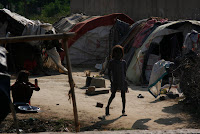
A big thank you also to the sponsors of Deepchandra (pictured on the left, blog case 19th December). He is doing better and can now sit up so it seems that the medicine and care from his family is making a difference.

The bills are a little higher than expected and the family is really struggling, so if anyone is inspired to take mercy on this case, please contact rupa@fflvrindavan.org .

Wednesday, January 21, 2009

Another success story


This is Kamlesh, smiling and fully recovered after major heart valve surgery back in June 2008. I wish all our blog viewers could have seen this transformation. Six months ago she was so weak that she could hardly even raise her head to drink water and was spending all her time just struggling to take small, rasping breaths. Now she is walking around, smiling, and living a normal life.

Kamlesh's recovery was far beyond what we could have hoped for and it makes me truly happy to see something like this - one human being completely resurrected due to the kindness of others.

Thank you to all those who supported Kamlesh and to all those who have supported this blog in the past.
Yours, Rupa.

Monday, January 19, 2009

Thank you + Update on Sangita


Thank you to Iskvaku Spencer and Sonja, USA, for donating $211 for this sweet, 50 year old grandfather to walk again. They made the donation in memory of Iskvaku's late Grandfather, Don Spencer.

Also, a big thanks to Raktambara das & Mukhya devi dasi, Belgium, for their donation of $50.

We now have $659 to raise.
This is good news and, even better news is that Sangita's operation has been successful. (see blog case December 1st 2008). Her doctors said that she will have to go back for another operation but she is recovering nicely from the first one. A Food for Life staff member went to Delhi yesterday to pick the family up in a taxi.

Please help us keep treating these needy cases. Contact rupa@fflvrindavan.org now.

Sangita after the operation

Saturday, January 17, 2009

Child marriage in India endangers maternal health: UNICEF

NEW DELHI (AFP) — India's high rate of child marriage is a major reason for its large number of maternal and infant deaths, said a UNICEF report released Thursday.

Child brides "become mothers long before their bodies are physically mature for pregnancy", said UNICEF's Karin Hulshof at the launch of the annual "The State of the World's Children" report in the capital New Delhi.

"The younger a girl is when she gets pregnant, the greater the health risk to her and her child," Hulshof said.

She said that child marriage prevents many girls from continuing their education, leaving them unaware of the risks and responsibilities of pregnancy and less likely to seek medical attention and immunise their babies.

More than 40 percent of the world's child marriages take place in India, a majority of them among poor, rural residents, even though the legal age to wed is 18.

In 2005 India's maternal mortality rate was 450 per 100,000 live births, compared to just 8 per 100,000 in industrialized countries in the same year.

The neonatal mortality rate was 39 per 1,000 live births in 2004, more than ten times the rate in developed countries.

Girls who give birth before the age of 15 are also five times more likely to die in childbirth than women in their 20s, said Hulshof.

She said progress had been slow in reducing maternal and newborn deaths but highlighted success in government-sponsored rural health initiatives that train health workers and offer cash incentives to women who seek post-natal care.

The report suggests improving rural infrastructure so more women have access to proper health facilities and mobilising communities so that women are encouraged to continue their education and delay marriage and childbirth.

"Saving lives requires an environment that empowers women and respects their rights," Hulshof said.

UNICEF has made reducing child and maternal mortality numbers one of its Millennium Development Goals, to be reached by 2015.

The following case was reported in our Sept 2008 blog.

Gomvati was married at 10 years old and widowed at 18. She had her first baby at 12 years old and now, at 18 years old, she has lost her husband and has a 6 year old and a 1 year old to take care of. Making her situation even more desperate is that she is so weak and sick herself that she has been admitted to hospital.

Saturday, January 10, 2009

Thank you + Update


Thank you to the McMillan family USA who donated $150 to Mr Baint's
operation, anonymous USA who donated $100 and Michael Michael,
Australia who donated $35, making a total of $285. This is great news as we can
now finance Mr Baint's next trip back to Delhi next week to undergo more tests.

The latest report from the hospital is that, while the operation and
tests are free, Mr Baint needs to pay for the artificial joints himself
and the cheapest type can be purchased for Rs45,000 (US$920). Doctors
say that without putting in new artificial joints, an operation will
be of limited benefit.

Next week, Mr Baint will travel back to the hospital for more tests
and to find out when the operation can be done. We will keep you updated
on when the doctors say that they can do the operation. We are just
hoping and praying that we will be able to raise enough funds for the
operation before the time that the doctors call him.

Food for Life Vrindavan is working toward opening a third school for
poor children by the end of 2009 and almost 100 cases have been
treated through this blog. This is all thanks to the help of our
supporters, without you we can do nothing to help anyone.

$920 is a lot of money, but if it is possible for anyone out there to
help save Mr Baint from having his leg poisoned by infections in the previous
implants, please contact rupa@fflvrindavan.org. Thank you for your continued support.

Tuesday, January 6, 2009

Leading a healthy life in UP difficult: Vice-President


7 Jan 2009, 0344 hrs IST, TNN
LUCKNOW: The prospect of living a healthy and long life for the 180 million population of Uttar Pradesh is profoundly disturbing. This is becausethe life expectancy at birth is 56 years in UP as against that of 74 years in Kerala.

This was stated by Vice-President Mohammed Hamid Ansari, while speaking at the fourth convocation of the prestigious 108-year-old Chhatrapati Shahuji Maharaj Medical University (CSMMU), which was earlier known as the King George's Medical College (KGMC), set up in 1905.
The audience was virtually sent into a brooding silence over the issues raised by the vice-president. In the backdrop of prevailing situation, he summed up: "It would thus seem that the state you are born into determines how long you would live." The health of citizens was a component of the globally and nationally accepted parameters of human development. On this count, "UP continues to languish at a low level of human development." This was a fact, the State Planning Commission had also noted, the vice-president pointed out.
Referring to the data produced by the National Family Health
Survey (NFHS) of 2005-06, the vice-president said indeed the picture emerged for UP was very distressing. The findings of the survey are as : Around half the women in the age-group between 15 and 50, and 85% children under 3 years in the state suffer from anaemia; Around half of the children are stunted and underweight; Less than a quarter of children have been completely immunised; Infant mortality in UP is 73 per thousand live birth as compared to the all-India figure of 57.
What was most disturbing, the vice-president said, was that less than 10% households in the state had access to piped drinking water in comparison to the all-India figure of 42% and only 43% of households in UP had electricity as compared to 68% nationwide. Likewise, only 33% in the state had access to toilet facility as compared to 45% India-wide, the vice-president said.
Apart from this, the vice-president said there was a need to bridge the critical gap in order to improve health care in the state. In line with this, he said UP should strive hard to provide better coverage of its population by health care facilities. At present, the population covered by a sub-centre in UP is 7,080 and the average distance is 3.4 kms, while the national average is 5,109 and 1.3 kms respectively. The result is that only 9% of the state's population makes use of government facilities for treatment of ordinary ailments.
While the rest depends on private medical facilities; 11% of the population is just not able to access medicare either by the government or private due to locational disadvantages. In case some of them get it, there is no guarantee of sustained care.
The state of affairs, the vice-president said, had disastrous consequences for the poor. Only 11% of population of UP receives antenatal care compared to 85% in Kerala and only 11.3% are institutional deliveries for UP compared to 96.6% for Kerala.

Friday, January 2, 2009

Mr Baint's leg

This is Mr Baint, his leg started turning black around 3 years ago, he is in constant pain and can hardly bend his knee. After being hit by a car 10 years ago, his leg was operated on and an artificial hip and knee were inserted.

Unfortunately, 5-6 years after the operation these both started seizing up and Mr Baint lost movement in his leg, suffered pain and swelling in his leg, which turned black and developed boils.

Mr Baint is a poor Brahman who runs a small roadside stall selling sweets and a few grocery items. His son-in-law is a priest at Bankhi Bihari temple Vrindavan. The family is very much focused on spiritual life and, despite their poverty, they do not chase after money. Unfortunately, when something like this happens, they suffer greatly because of their lack of worldly accomplishment.

Mr Baint has made several trips to Delhi to seek treatment. It was the first time that he had ever been to Delhi and, on his first visit, a Food for Life Staff member accompanied him to help him negotiate the hospital system and find his way around. Mr Baint has spent several nights sleeping outside, in temperatures of 2 degrees celcius (around 38 degrees Fahrenheit) because, when he goes to Delhi for check ups, he cannot afford a hotel.

Please donate a small something to help this family. They are contributing what they can to Mr Baint's treatment and the treatment is being done in a government hospital, which does not cost much, but we need to raise something for him to be able to afford to go back and forth to Delhi and pay for medicines, food and living costs while away. Because he was not previously able to get support, Mr Baint lived with a poisoned leg for 3 years.

We are aiming to raise $300 for them. Please help out in any way you can.

Thank you


Thank you to a volunteer from Food for Life's UK office, for offering to pay for Deepchandra's treatment for the next 3 months. We very much appreciate all your hard work and support. Deepchandra has been to Jaipur to see the doctor and is now resting at home, taking the prescribed medicine, which his family can only afford due to your support.

All of his family and the team at Food for Life Vrindavan are praying that the medicine will work and he will regain the movement in his hands and legs. Please pray for him also. We will let you know how he is progressing.

Meat Means Misery for the World's Hungry


There is more than enough food in the world to feed the entire human population. So why are more than 840 million people still going hungry?

Our meat-based diet is partly to blame, as land, water, and other resources that could be used to grow food for human beings are being used to grow crops for farmed animals instead. According to a recent report by Compassion in World Framing, "[c]rops that could be used to feed the hungry are instead being used to fatten animals raised for food." It takes up to 16 pounds of grain to produce just 1 pound of edible animal flesh.

The average adult human burns about 2,000 calories per day, just living his or her life. We use almost all the calories that we consume to move around, breathe, and do everyday tasks. The same is true of farmed animals. For every pound of food that they are fed, only a fraction of the calories are returned in the form of edible flesh. The rest of those calories are burned away raising the animal to slaughter weight or contributing to feathers, blood, and other parts of the animal that are not eaten by humans. This is why animals raised for food have to eat as many as 16 pounds of grain to create just 1 pound of edible flesh.

Because the industrial world is exporting grain to developing countries and importing the meat that is produced with it, farmers who are trying to feed themselves are being driven off their land. Their efficient, plant-based agricultural model is being replaced with intensive livestock rearing, which also pollutes the air and water and renders the once-fertile land dead and barren.

If this trend continues, the developing world will never be able to produce enough food to feed itself, and global hunger will continue to plague hundreds of millions of people around the globe. The Guardian explains that there's only one solution: "It now seems plain that [a vegan diet] is the only ethical response to what is arguably the world's most urgent social justice issue."

ref: hunger.http://www.goveg.com/worldhunger.asp